Related pages
Interpreting the OT Prophets
The last section of the Old Testament contains sixteen books which are classed as the prophets. They are traditionally divided into the major and minor prophets, based on the length of the books, rather than on their importance. The major prophets are Isaiah, Jeremiah, Ezekiel and Daniel. The minor prophets are the last twelve books of the Old Testament, from Hosea to Malachi.
The Book of Lamentations is included after Jeremiah, because Jeremiah is the traditional author of that book. However Lamentations is not prophetic literature, and was included in the third section of the Hebrew Scriptures, known as the writings or Ketubim. The Book of Daniel was also included in the writings, rather than in the prophets. The books were rearranged into the current order when the Hebrew Scriptures were translated into the Greek Septuagint (LXX).
The prophetic books mostly consist of Hebrew poetry, recording the words of the prophet. Many also include some narrative sections, which give us some insight into the life history of the prophet himself. In some books, these sections are only short, but Jeremiah contains extensive narrative sections.
What is prophecy?
On a popular level prophecy is normally associated with foretelling the future. The word 'prophecy' is usually understood to mean a prediction, stating what will happen in the future before it does. However this is only part of the purpose of an Old Testament prophet.
The essential function of an Old Testament prophet was to bring the words of God to his people. This is why so many of their words are introduced with phrases such as, “Thus says the Lord ...”. They were God’s spokesmen. They listened to what God was saying to them, and passed on God’s Word to the people, often in quite imaginative and creative ways.
Their basic message was to call God’s people back to the covenant originally made on Mt. Sinai through Moses (Ex 20-24), and repeated in the Book of Deuteronomy. So to understand the prophets, it is necessary to know and understand the law of Moses.
The prophet lived in a particular time in history, and was very aware of the events in his own nation, or the nation he was sent to prophesy to. He was familiar with the political, religious and moral situation, and brought God’s Word into that situation. They were called by God to bring a message of warning, calls to repentance, and promises of blessing. Much of their work was to repeat the blessings and cursings of Deuteronomy chapter 28.
Most of their message was a word of judgement, addressing the sin, idolatry and injustice in the nation and warning of the consequences if the people did not repent and return to God and his covenant. The judgement will come through sword, famine or disease - the curses of Deuteronomy. The prophet called for true repentance from the heart, and dedicated commitment to Yahweh. Outward religiosity was not enough, and was frequently condemned by the prophet.
They also brought a promise of future hope and salvation for those who repent. This promise was for the faithful remnant, the minority within the wider population who remained faithful to God and obedient to his covenant. The promise had two aspects. The first was for the physical restoration of Israel to the land after the exile, and the second predicted the much greater spiritual restoration when the Messiah came. From the prophet’s perspective these often tend to merge together into one event, so can be difficult for us to distinguish between them.
How should we interpret the prophecies?
We must read and study them in their original historical context, knowing what state the nations of Israel or Judah were in politically, economically and spiritually. We need to remember that the prophet brought words from God into a specific historical situation in the nations of Judah or Israel, or the surrounding nations. The words of the prophets can only be truly understood in that context.
What about predictive prophecy?
Prophecy does involve predicting future events (future to the original readers), but this was only a small aspect of prophecy, and was not the prophet's main purpose. Many people mainly look to the prophets for predictions about what is still to happen in our future. However we should recognise that less than 2% of OT prophecy is about Jesus, and about 1% yet to be fulfilled in our future, so most of the predictions have already been fulfilled in history. The event which was predicted most frequently by the prophets was not the coming of Jesus, but the destruction of Jerusalem in 586 BC.
The dynamic of prophecy
The purpose of prophecy is to call God's people back to him. It is a call to repentance. Predictive prophecy is not fatalism, as it demands a response. What happens in the future is determined by that response. For example, Jonah predicted that Nineveh will be destroyed in forty days (Jonah 3:4). However, Nineveh repented and was not destroyed in forty days. What appeared to be a definite statement about future events was actually conditional.
Jeremiah stated the general principle about predictive prophecy about nations when God said to him: "At one moment I may declare concerning a nation and kingdom, that I will pluck up and break down and destroy it, but if that nation, concerning which I have spoken, turns from its evil, I will change my mind about the disaster that I intended to bring on it.” (Jer 18:7-8). Judgement can be turned into blessing through repentance. If they turn away from their sin, then God will turn away from his judgement.
He then stated the opposite situation: “And at another moment I may declare concerning a nation that I will build and plant it, but if it does evil in my sight, not listening to my voice, then I will change my mind about the good that I intended to do to it.” (Jer 18:9-10). Blessing can be turned into judgement through disobedience.
Practical steps to understand the prophets
1. The book often begins with an introduction which indicates which kingdom the prophet ministered in. This can be the northern kingdom of Israel, the southern kingdom of Judah, or a pagan nation. It often indicates which king was on the throne, and the name of the king ruling in the other kingdom at the same time. It also often gives some biographical details of the prophet.
2. We can now read about the relevant king(s) in the books of Kings and Chronicles. We should note the character of the king, his relationship with God, and any significant events in his reign. Was he faithful to Yahweh, or did he indulge in idolatry? We should also note which world power was dominant at that time (Assyria, Babylon, Persia, Egypt), and who was their king. We should also find out about the political situation in Judah or Israel, and whether there were any alliances with world powers, or any major battles.
3. From a concordance, we can see whether the prophet is mentioned anywhere else in scripture and what we can learn about him.
4. From the book itself, we can find out some information about the prophet himself, particularly if there is a description of his call to be a prophet. This often gives insight into his message. Reading through the rest of the book we can often find out more about the life and character of the prophet.
5. As we read through the book we should note who is speaking? (look at the pronouns). Is God speaking directly, or is the prophet speaking the word of the Lord, is the prophet replying to God, or are the people responding. Sometimes the prophet puts words into the mouths of the people.
6. We should also note who is being addressed? This can be God's covenant people (in Judah or Israel), the remnant faithful to God, the whole world, other pagan nations, the prophet individually, the king, the priests, the women, or the leaders of the nation.
7. Then we should look carefully at what is being said. Note what the people had done wrong, and which groups of people are specifically addressed: priests, prophets, the king, or the general population. Note what judgement is threatened, and what blessings are promised to the faithful remnant. Also note the main themes of the prophet, and any predictions about the Messiah.
8. For additional information, we can read about the relevant king or the prophet in a Bible Dictionary to find out more about the political and religious background. The introduction to a good commentary can also be a good source of information.
The prophet’s view of their future
We need to put ourselves in the shoes of the prophet and look at the future from their perspective, which is very different from our own. The biggest event looming ahead was the exile in Assyria for the northern kingdom of Israel, or in Babylon for the southern kingdom of Judah. The hope for restoration to the land and the coming of the Messiah and the glorious future was sometime after that. From their perspective this all happened on the Day of the Lord. They would not be particularly aware of the time-span between these events.
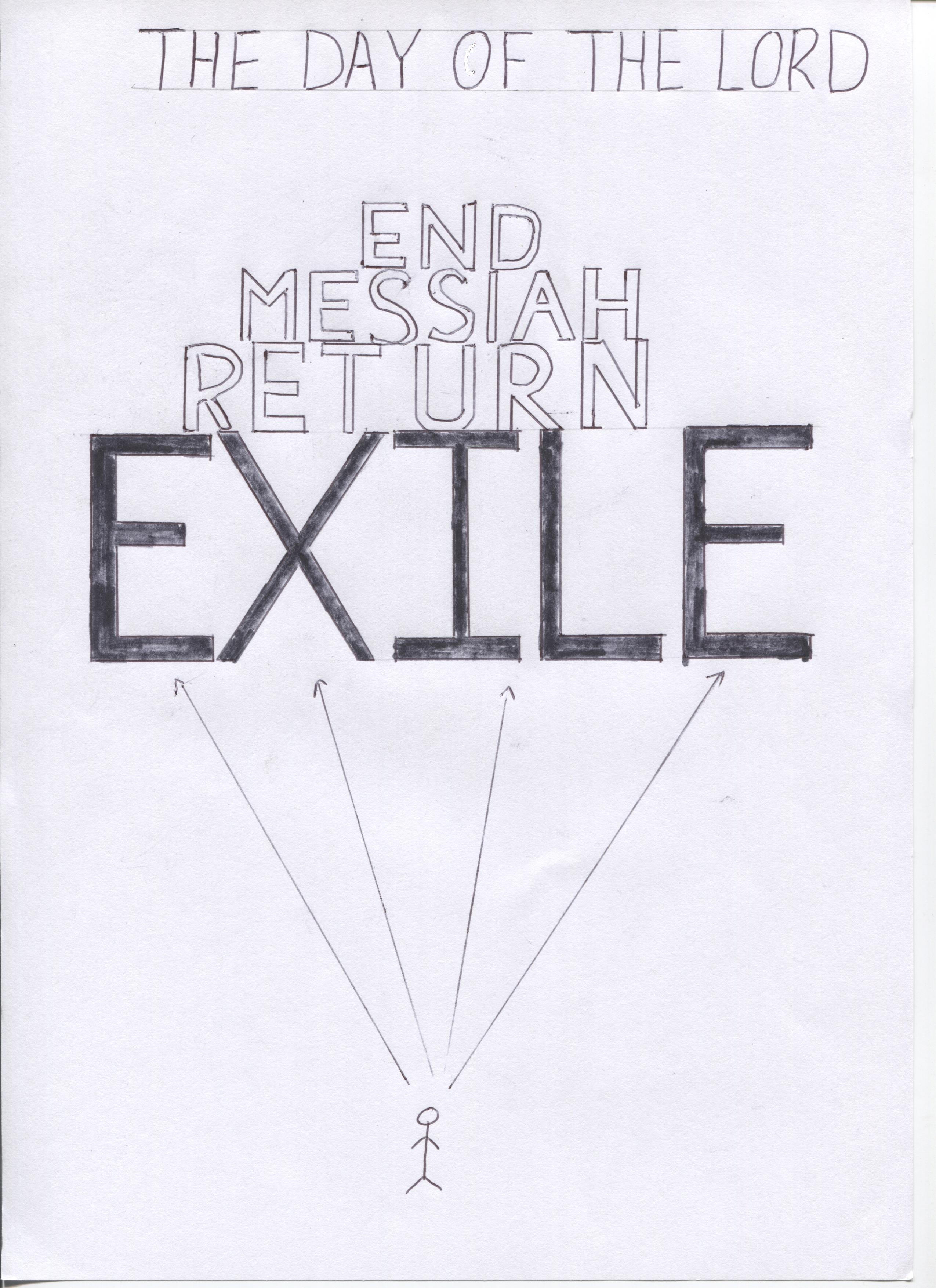
Summary of the prophets
Idolatry and Injustice
The two great prophetic themes are words condemning idolatry and injustice. These are based on the breaking of what Jesus declared were the two greatest commandments: To love God (Commandments 1-4), and to love your neighbour (Commandments 5-10).
Idolatry is the result of not being totally devoted to Yahweh and loving him alone, but worshipping other gods, particularly gods of fertility, such as Ba'al.
Injustice is the result of not being loving to your neighbour, particularly through injustice to the poor and needy in society. This comes as a result of having wrong view of God.
Hosea's greatest emphasis is on idolatry being spiritual adultery, which complements Amos' greatest emphasis being on social injustice, particularly the rich oppressing the poor.
Two opposing world-views: 'revelation' or 'religion'
The prophets declare an incompatibility between the divine revelation of God's kingdom and human religion, a distinction which is fundamental to our understanding of prophetic literature.
Religion is fundamentally opposed to divine revelation because it appeals to human pride, rather than calling for humility.
Israel had the unique privilege of receiving special revelation from God, so they could know him personally, and receive his blessings of peace in the land. In return, he expected them to be exclusively loyal to him, living a life of faith, submitting to his rule and obeying his commands, causing their lifestyle to be in contrast to and a light to the surrounding nations.
Israel was surrounded by very religious pagan nations, who attempted to appease their gods through sacrifice or to manipulate them for their own benefit, through different methods of divination and magic.
From the basis of either revelation or religion, two contrasting cultures develop. Divine revelation should lead to a culture living in submission to God, recognising his lordship over all of life, which refuses to compromise with human systems based on religion.
Cultures based on revelation continually face the temptation of syncretism, attempting to mix revelation with religion. This is true both for Israel, and for the church. In his law, and repeatedly through his prophets, God called Israel to be faithful to worship only him, and not to compromise by worshipping idols. This is essentially a call to faith, to trust God alone, as the Creator of the universe, to provide for their physical needs, particularly for protection and food.
This call to faith is equally applicable to believers today. In his law, God forbade his people from using the magical practices used by the pagan nations, but instead provided legitimate means of seeking his will, including giving his word through the prophets. If the Creator God is in control of his universe, and more powerful than any other gods, then there can be no advantage to be gained in turning to other religious systems.
Today, the same distinction exists between the Gospel and all other forms of religion. God has sovereignly provided the only way of salvation through the death of his Son, therefore there can be no compromise with any other form of religion.
There are two other associated dangers. The first is playing pragmatic power politics (realpolitik), in which godly standards are dropped in order to gain power. The other is listening too much to public opinion (vox populi), when the demands of divine revelation are watered down to gain popularity.
These were dangers for Israel and are a danger for the church, especially in today’s postmodern society, which rejects absolute values, and exalts tolerance.
In proclaiming the Gospel, we are not just declaring the means of salvation, but also a radically different world-view and way of living from the world.
Related pages